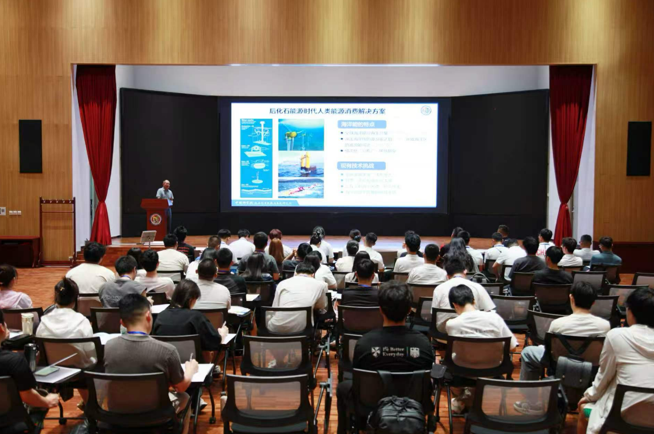
The triboelectric nanogenerator (TENG) invented by Wang’s team in 2012 is a revolutionary technology for energy harvesting and sensing. To quantify the output power of TENG, we investigated the electrodynamic problems in moving media system. In classical electrodynamics, by motion, it always means a relative movement of two observers in inertia reference frames, so that the covariance of the Maxwell’s equations is preserved respectively in two spaces under Lorentz transformation. The theory for describing the electromagnetic behavior of the charged particles in vacuum space can be well described using the special relativity because of the invariance of the speed of light in vacuum. However, for engineering applications, the media have shapes and sizes and may move with acceleration, and a system may have multiple moving objects that may be correlated or independently under external mechanical triggering. The application of the Lorentz transformation and the assumption of the invariance of the Maxwell’s equations may have to be reexamined. This talk presents the theory for describing the electromagnetic phenomena in this electro-magnetic-mechano system. We first introduce the Maxwell’s equations for a mechano-driven media system (MEs-f-MDMS) under low-speed approximation (v << c) [1-5]. Then, related experiment results are presented to prove that the MEs-f-MDMS is required for explaining the observed data, while the Minkowski’s theory cannot explain the experimental observations [6,7]. This further consolidate the correctness of the MEs-f-MDMS.
References:
[1] Z.L. Wang “The Maxwell’s equations for a mechano-driven media system (MEs-f-MDMS)“, Advances in Physics: X, 9 (2024) 1–55; https://doi.org/10.1080/23746149.2024.2354767
[2] Z.L. Wang „ General solutions of the Maxwell’s equations for a mechano-driven media system (MEs-f-MDMS) (2024 J. Phys. Commun. 8 115004“, J. Phys. Commun. 9 (2025) 02950.
[3] Z.L. Wang “Effective fields approach for the Maxwell’s equations for a mechano-driven media system toward engineering applications“, Electromagnetic Science, 3 (2025) 0110152; https://doi.org/10.23919/emsci.2025.0015
[4] Er-Ping Li and Zhong Lin Wang “New Advances in Maxwell’s Equations and Applications”, Springer Nature (2024).
[5] Zhong Lin Wang* „Coupling the Minkowski’s theory with the Maxwell’s equations for a mechano-driven media system for engineering electromagnetism“; http://arxiv.org/abs/2306.02535
[6] Yurui Shang†, Leo N.Y. Cao†,, Erming Su, Wei Tang, Zhong Lin Wang* “Dynamics of Electromagnetic Waves Generation by a Rotating Dielectric Disc in a Constant Magnetic Field – A Revisit to Feynman’s “Anti-flux” Examples”, AIP Advances, 15 (2025) 035349; https://doi.org/10.1063/5.0245754
[7] Yurui Shang, Yige Ma, Mingda Wang, Longyi Li, Gaosi Han, Zhong Lin Wang* “On the Multi-frequency Electromagnetic Emission from a Rotating Charged Dielectric Disk Made of Isotropic Media – a verification of the Maxwell's equaitons for a mechano-driven medium system”, AIP Advances, 16 (2026) 085116; https://doi.org/10.1063/5.0337943